The Regulation 19 Consultation of the Local Plan started on 24th December 2024. This is more complex that the The Regulation 18 Consultation held in February and March 2023. The updated Local Plan has many changes, but the only comments allowed relate to issues that are legally compliant, sound, and meets the Duty to Cooperate . There are 8 documents, which have a total of hundreds of pages.
A key concern on the Regulation 19 Consultation is that the use of Green Belt sites is justified and compliant with NPPF guidelines. Complaints or comments can be raised on this aspect of the consultation. Consultation closes on Wednesday 5th February 2025.
Please contact Epsom and Ewell Borough Council if you have any queries or concerns on the way that Green Belt sites are to be used for developments in the local plan. Full contact details are on the link below.
https://www.epsom-ewell.gov.uk/regulation19
National Planning Policy Framework December 2024
Protecting Green Belt land
142.
The Government attaches great importance to Green Belts. The fundamental aim of Green Belt policy is to prevent urban sprawl by keeping land permanently open; the essential characteristics of Green Belts are their openness and their permanence.
143.
Green Belt serves five purposes:
a) to check the unrestricted sprawl of large built-up areas;
b) to prevent neighbouring towns merging into one another;
c) to assist in safeguarding the countryside from encroachment;
d) to preserve the setting and special character of historic towns; and
e) to assist in urban regeneration, by encouraging the recycling of derelict and other urban land.
145.
Once established, Green Belt boundaries should only be altered where exceptional circumstances are fully evidenced and justified through the preparation or updating of plans. Strategic policies should establish the need for any changes to Green Belt boundaries, having regard to their intended permanence in the long term, so they can endure beyond the plan period. Where a need for changes to Green Belt boundaries has been established through strategic policies, detailed amendments to those boundaries may be made through non-strategic policies, including neighbourhood plans.
146.
Exceptional circumstances in this context include, but are not limited to, instances where an authority cannot meet its identified need for homes, commercial or other development through other means. If that is the case, authorities should review Green Belt boundaries in accordance with the policies in this Framework and propose alterations to meet these needs in full, unless the review provides clear evidence that doing so would fundamentally undermine the purposes (taken together) of the remaining Green Belt, when considered across the area of the plan.
147.
Before concluding that exceptional circumstances exist to justify changes to Green Belt boundaries, the strategic policy-making authority should be able to demonstrate that it has examined fully all other reasonable options for meeting its identified need for development. This will be assessed through the examination of its strategic policies, which will take into account the preceding paragraph and whether the strategy:
a) makes as much use as possible of suitable brownfield sites and underutilised land;
b) optimises the density of development in line with the policies in chapter 11 of this Framework, including whether policies promote a significant uplift in minimum density standards in town and city centres and other locations well served by public transport; and
c) has been informed by discussions with neighbouring authorities about whether they could accommodate some of the identified need for development, as demonstrated through the statement of common ground.
148.
Where it is necessary to release Green Belt land for development, plans should give priority to previously developed land, then consider grey belt which is not previously developed, and then other Green Belt locations. However, when drawing up or reviewing Green Belt boundaries, the need to promote sustainable patterns of development should determine whether a site’s location is appropriate with particular reference to paragraphs 110 and 115 of this Framework. Strategic policy-making authorities should consider the consequences for sustainable development of channelling development towards urban areas inside the Green Belt boundary, towards towns and villages inset within the Green Belt or towards locations beyond the outer Green Belt boundary.
151.
Once Green Belts have been defined, local planning authorities should plan positively to enhance their beneficial use, such as looking for opportunities to provide access; to provide opportunities for outdoor sport and recreation; to retain and enhance landscapes, visual amenity and biodiversity; or to improve damaged and derelict land. Where Green Belt land is released for development through plan preparation or review, the ‘Golden Rules’ in paragraph 156 below should apply.
Proposals affecting the Green Belt
153.
When considering any planning application, local planning authorities should ensure that substantial weight is given to any harm to the Green Belt, including harm to its openness. Inappropriate development is, by definition, harmful to the Green Belt and should not be approved except in very special circumstances. ‘Very special circumstances’ will not exist unless the potential harm to the Green Belt by reason of inappropriateness, and any other harm resulting from the proposal, is clearly outweighed by other considerations.
154.
Development in the Green Belt is inappropriate unless one of the following exceptions applies:
b) the provision of appropriate facilities (in connection with the existing use of land or a change of use), including buildings, for outdoor sport, outdoor recreation, cemeteries and burial grounds and allotments; as long as the facilities preserve the openness of the Green Belt and do not conflict with the purposes of including land within it;
c) the extension or alteration of a building provided that it does not result in disproportionate additions over and above the size of the original building;
Other than in the case of development on previously developed land or grey belt land, where development is not inappropriate.
d) the replacement of a building, provided the new building is in the same use and not materially larger than the one it replaces;
f) limited affordable housing for local community needs under policies set out in the development plan (including policies for rural exception sites); and
g) limited infilling or the partial or complete redevelopment of previously developed land (including a material change of use to residential or mixed use including residential), whether redundant or in continuing use (excluding temporary buildings), which would not cause substantial harm to the openness of the Green Belt.
155.
The development of homes, commercial and other development in the Green Belt should also not be regarded as inappropriate where:
a. The development would utilise grey belt land and would not fundamentally undermine the purposes (taken together) of the remaining Green Belt across the area of the plan;
b. There is a demonstrable unmet need for the type of development proposed;
c. The development would be in a sustainable location, with particular reference to paragraphs 110 and 115 of this Framework; and
Which, in the case of applications involving the provision of housing, means the lack of a five year supply of deliverable housing sites, including the relevant buffer where applicable, or where the Housing Delivery Tests was below 75% of the housing requirement over the previous three years; and in the case of traveller sites means the lack of a five year supply of deliverable traveller sites assessed in line with Planning Policy for Traveller sites.
In the case of development involving the provision of traveller sites, particular reference should be made to Planning Policy for Traveller Sites paragraph 13.
d. Where applicable the development proposed meets the ‘Golden Rules’ requirements set out in paragraphs 156-157 below.
156.
Where major development involving the provision of housing is proposed on land released from the Green Belt through plan preparation or review, or on sites in the Green Belt subject to a planning application, the following contributions (‘Golden Rules’) should be made:
a. affordable housing which reflects either: (i) development plan policies produced in accordance with paragraphs 67-68 of this Framework; or (ii) until such policies are in place, the policy set out in paragraph 157 below;
b. necessary improvements to local or national infrastructure; and
c. the provision of new, or improvements to existing, green spaces that are accessible to the public. New residents should be able to access good quality green spaces within a short walk of their home, whether through onsite provision or through access to offsite spaces.
157.
Before development plan policies for affordable housing are updated in line with paragraphs 67-68 of this Framework, the affordable housing contribution required to satisfy the Golden Rules is 15 percentage points above the highest existing affordable housing requirement which would otherwise apply to the development, subject to a cap of 50%60. In the absence of a pre-existing requirement for affordable housing, a 50% affordable housing contribution should apply by default. The use of site-specific viability assessment for land within or released from the Green Belt should be subject to the approach set out in national planning practice guidance on viability.
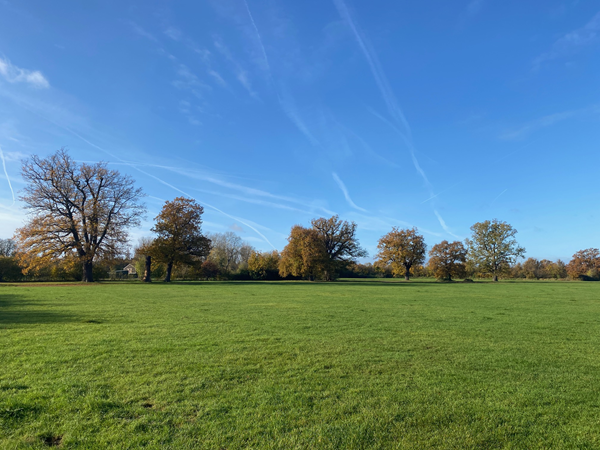
 Ewell Green Belt