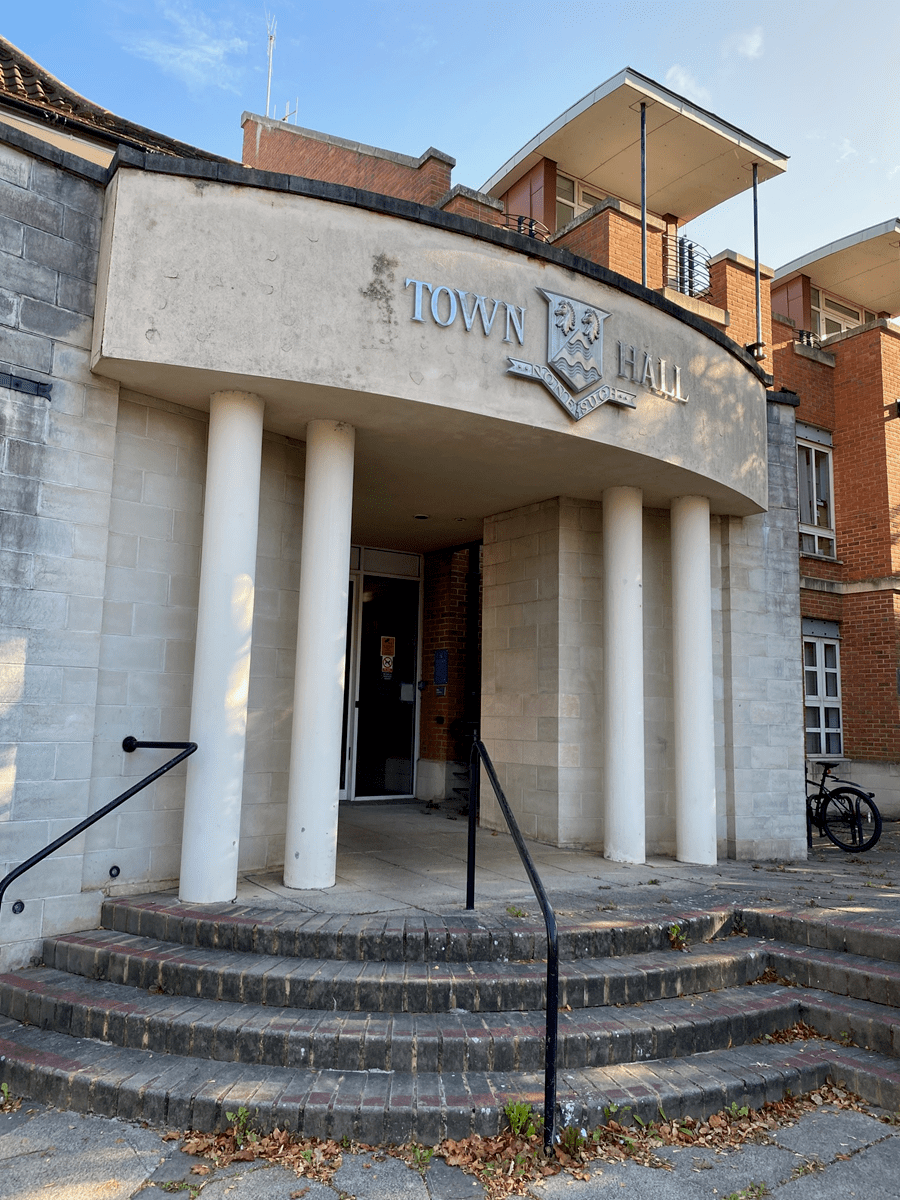
The meeting of the LLPC on 10th March is likely to be pivotal for planning in the borough of Epsom and Ewell. There are two items on the agenda that are significant for planning. The impact of the items 10 and 11 is uncertain, but changes can be expected to the Local Plan that was approved by EEBC in December 2024.
Item 10 relates to changes made to National Policy Planning Framework. This has been updated by UK Government to expand and accelerate the building of new homes.
Item 11 related to communications between EEBC and the Inspector of the Local Plan for Epsom and Ewell. Members of the Planning Department have been supplying information to the Inspector. This includes a new document on Green Belt that was created and submitted without review and approval from councillors. There are major concerns that EEBC has exceeded their authority and operated outside of the terms of governance.
Licensing and Planning Policy Committee
Tuesday 10 March 2026 at 7.30 pm
Place: Council Chamber, Epsom Town Hall
Online access to this meeting is available on YouTube:
YouTube On-line Broadcast
The members listed below are summoned to attend the Licensing and Planning Policy Committee meeting, on the day and at the time and place stated, to consider the business set out in this agenda.
Councillor Peter O’Donovan (Chair)
Councillor Neil Dallen (Vice-Chair)
Councillor Steve Bridger
Councillor Alex Coley
Councillor Julian Freeman
Councillor Rob Geleit
Councillor Phil Neale
Councillor Humphrey Reynolds
Councillor Clive Woodbridge
Councillor Lucie McIntyre
For further information, please contact democraticservices@epsom-ewell.gov.uk or telephone 01372 732000
Questions must be received in writing by Democratic Services by noon on the fifth working day before the day of the meeting. For this meeting this is Noon, Tuesday 3rd March.
A written copy of statements must be received by Democratic Services by noon on the working day before the day of the meeting. For this meeting this is Noon, Monday 9th March.
Agenda (Part)
10. NATIONAL PLANNING POLICY FRAMEWORK: PROPOSED REFORMS AND OTHER CHANGES TO THE PLANNING SYSTEM (Pages 219 – 424)
The Government launched a consultation on changes to the National Planning Policy Framework (NPPF) on the 16 December 2026. The proposals are a substantive update to the NPPF which includes comprehensive changes to the document structure and format with most chapters being split between ‘plan making policies’ and ‘decision making policies’ and the inclusion of a series of new annexes providing detail on the standard method for housing and grey belt assessment.
There are a significant number of changes proposed, these include:
- Stating that where local plan policies are inconsistent with national decision making policies they should be given limited weight.
- Providing national policy to guide the content of spatial development strategies (SDSs); a new tier of strategic planning.
- That housing and mixed use development around train stations defined as ‘well connected’ will not be considered inappropriate.
- Proposing that plots around train stations should be built out at a density of at least 40 dwellings per hectare, rising to 50 where the station is “well connected”.
- Introducing a medium size site category into the planning system, which will cover developments of between 10 to 49 homes, with an area of up to 2.5ha in size.
- Proposing a revision of the weight given to the consideration of the potential effect of a development proposal on a designated heritage asset from “great” to “substantial”.
11. LOCAL PLAN UPDATE (Pages 425 – 434)
In accordance with Appendix 5 – 3.4 of the Constitution a member has requested that an item be placed on the agenda for the next scheduled Licensing & Planning Policy Committee on March 10th “To update the committee on all submissions and modifications made to the Inspector for the Local Plan, following examination hearings last year.”
This report responds to the above item request and reflects the position as of 23 February 2026.
Analysis generated by Gemini AI on the information supplied by EBBC.
Based on the Licensing and Planning Policy Committee agenda for March 10, 2026, the following summaries detail the proposed changes regarding development near train stations and the release of greenbelt land:
Development Near Train Stations
Proposed reforms to the National Planning Policy Framework (NPPF) introduce new standards for housing and mixed-use development around “well-connected” train stations:
Suitability: Development around these stations will no longer be considered “inappropriate”.
Density Requirements: The government proposes a minimum build-out density of at least 40 dwellings per hectare near train stations, rising to 50 dwellings per hectare if the station is classified as “well-connected”.
Land Use Optimization: Local plans are encouraged to identify sites with redevelopment potential, specifically mentioning the reuse of service yards, car parks, and other transport infrastructure to accommodate development.
Release of Greenbelt Land
The proposed NPPF updates include significant changes to how “grey belt” and Green Belt land is assessed and utilized:
Grey Belt Assessment: New annexes are being introduced to provide detailed guidance on the standard method for housing and “grey belt” assessments.
Local Plan Scrutiny: During Stage 2 of the Local Plan Examination (September–October 2025), concerns were raised that the Council was not meeting enough of its housing needs.
Additional Reviews: The Planning Inspector requested the Council perform additional work regarding Green Belt sites listed in the Land Availability Assessment (LAA).
Sustainable Development: New policies aim to maximize growth on suitable land within existing settlements while limiting development away from them to protect the countryside. However, development plans must provide for objectively assessed housing needs unless specific Framework policies for protecting important areas or assets provide a “strong reason” for restriction.
To object to developments such as new flats or the release of Green Belt land, you can utilize several formal channels provided by the Council and the national planning system:
1. Participate in Public Meetings
The Licensing and Planning Policy Committee sets aside up to 30 minutes for questions and statements from the public at its meetings.
Eligibility: You can participate if you live, work, attend an educational establishment, or own/lease land in the Borough.
Submission Process:
Questions: Must be submitted in writing to Democratic Services by noon on the fifth working day before the meeting (e.g., for the March 10, 2026 meeting, the deadline was March 3).
Statements: A written copy must be received by noon on the working day before the meeting.
Limits: Each question or statement is limited to 3 minutes.
2. Engage in Local Plan Consultations
The Council is currently updating its Local Plan, which dictates where housing is built and which Green Belt land might be released.
Objecting to Specific Sites: During the examination of the Local Plan, the Planning Inspector may request additional work on Green Belt sites identified in the Land Availability Assessment (LAA). You can monitor these updates and provide representations when the Council opens formal consultation periods.
Challenging “Grey Belt” Designations: The government’s proposed reforms introduce the “grey belt” concept for Green Belt land that is previously developed or makes a limited contribution to Green Belt purposes. You can submit evidence or arguments during consultation phases if you believe a specific site does not meet these criteria.
3. Influence Neighbourhood Plans
Communities can draw up their own Neighbourhood Development Plans, which have equivalent legal status to the Local Plan once “made” (adopted).
Voting: These plans are subject to a public referendum. For example, the Stoneleigh and Auriol Neighbourhood Plan was recently approved with a 93.4% “Yes” vote.
Involvement: You can join or support a Neighbourhood Forum to help shape the specific design and density policies for your local area.
4. Respond to Planning Applications
For specific “major developments” (like large blocks of flats), developers are encouraged to engage with the local community prior to submitting a planning application to resolve key matters.
Representations: Once an application is submitted, you can submit formal representations to the local planning authority.
Grounds for Objection: Effective objections typically focus on “material considerations,” such as impact on neighboring amenity (outlook, privacy), heritage assets, or inconsistency with the National Planning Policy Framework (NPPF).
5. National Consultations
You can also respond directly to government consultations on national policy changes. For instance, the government recently held a consultation on proposed reforms to the NPPF, including new rules for development near “well-connected” train stations. The Council itself has expressed “strong concerns” about these being too permissive and may reflect similar community sentiments in its responses.
 Ewell Green Belt